Hermes Agent: Local AI Without the Abdication
Why running your own AI agent in a homelab matters – and why you can't just hand over responsibility to it.
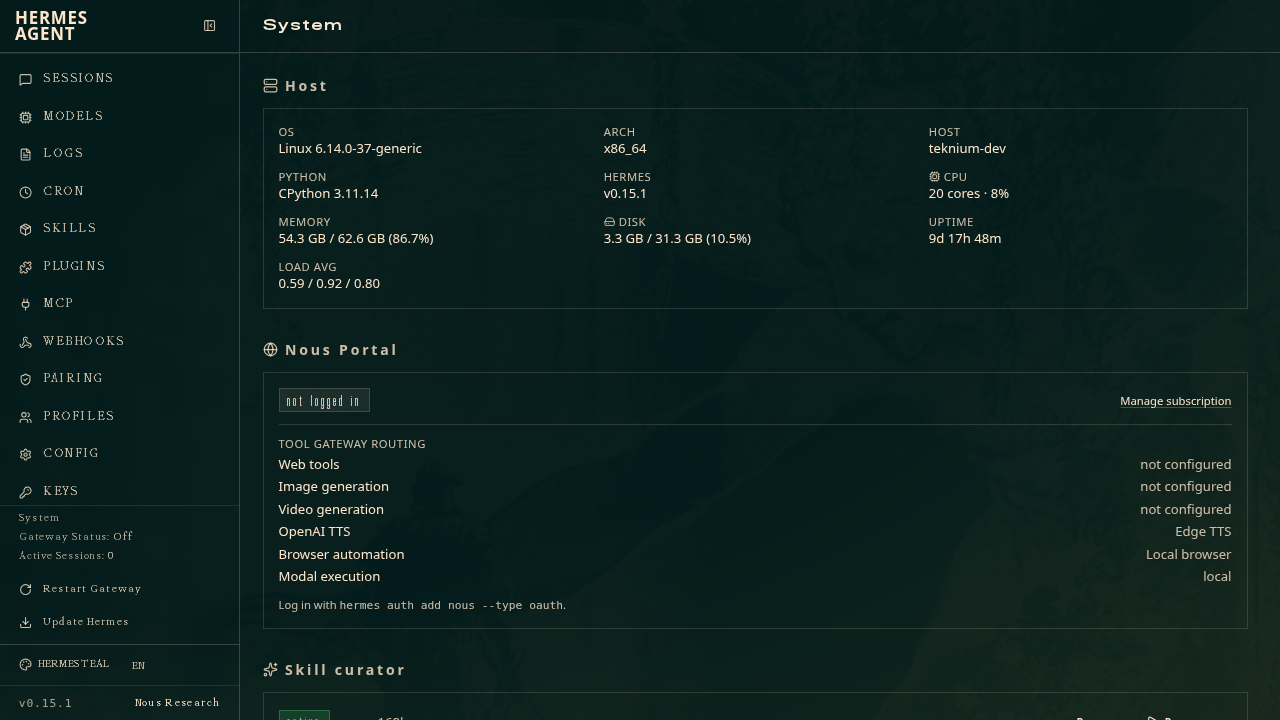
You're building infrastructure in your homelab. You need an AI that understands your environment, can execute commands safely, and stays under your control. The obvious choice is cloud AI – ChatGPT, Claude, Anthropic's API. But that means handing your infrastructure queries, your code, your automation scripts to a third party. Every command you run, every debugging session, is logged and could be used for training.
There's a trap here, though. The wrong way to solve this is to just delegate the whole problem to an AI agent. Point Hermes at your servers, tell it to "fix this" and walk away. That's vibecoding – trading one form of abdication for another.
The right way is different. Hermes Agent is a toolkit for building workflows that stay under your control – where you remain responsible for every decision the agent makes.
What Hermes Actually Is
Hermes is an open-source AI agent framework by Nous Research. It wraps language models with tools: file operations, terminal commands, web fetching, code execution. It can reason about tasks, plan sequences of actions, and execute them.
The key difference from just using ChatGPT: Hermes is modular. You choose the model. You choose the tools it has access to. You choose what it can do. You run it in your homelab, on your network, with your data staying local unless you explicitly send it elsewhere.
It has skills – reusable workflows you define once and invoke repeatedly. It has persistent memory about your environment. But none of this is automatic or invisible. You write the skills. You audit the commands before they run. You stay in the loop.