The Architecture of Autonomy and Freedom
Why a United Europe and the Web needs to be federated
On the sixth of December 2025 I published an blog post about why we need a sovereign Europe. Back then I focused on the political shift of the US that happened in 2025 with and after the second inauguration of US President Donald Trump. That shift was and is a wake-up call to us Europeans. Our data, identities and security are in some sort or way in the hands of Washington DC.
Sovereignty isn't just about trade agreements or military aid, it's also about the very infrastructure of our daily lives. If we want a united Europe then we can't build it upon rented infrastructure and security. European democracy can't survive when it's public discourse is hosted and controlled by platforms and algorithms designed in California and governed by the whims of billionaires.
The Digital Dimension of Subsidiarity
In politics and in the context of the confederation that the European Union already is do we talk about subsidiarity – the idea that matters should be handled at the smallest and most regional authority. It's a idea designed to prevent a concentration of power and respect local autonomy.
But we have ignored this idea in our pockets while we continue to fight for it in the European Parliament as well as our national parliaments. Our current digital lives as European societies are the antithesis of subsidiarity – they are hyper-centralised and governed by an approach where a single decision in a company headquarters in Silicon Valley or Texas can sway elections in Warsaw, Berlin or Bucharest.
A digital and technical mirror
At this point does the Fediverse come into perspective – not as a collection of niche apps but as a technical mirror to the European project. We are essentially talking about digital subsidiarity when we talk about ActivityPub and decentralised networks.
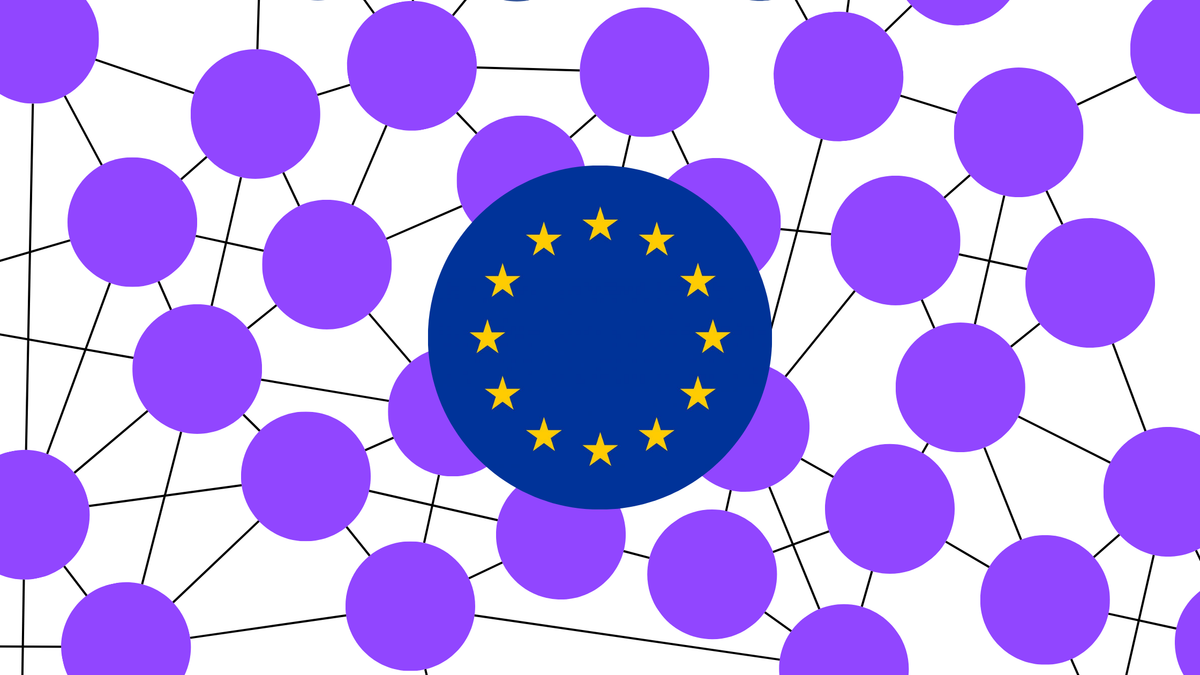
In the Fediverse a so called "instance" (commonly also referred to as a server) is like a EU member state or your local city/municipality. Instances have their own rules, culture and moderation – much like I described the necessity for Europe to have independent control in the blog post mentioned at the top of this blog post. Yet they form a united front because they basically speak the same open language. It's a federation that respects the individual while empowering collectives.
Security Policy "Protocols, not Platforms"
We are outsourcing our sovereignty if we continue to host our digital discourse on proprietary platforms. For a united federal Europe to be resilient our public institutions – from the European Parliament to the local town administration – must inhabit a digital space they actually own.
We don't need a "European [add US social media platform]" – that would be just a different kind of centralised trap – we need a commitment to open protocols for our digital infrastructure. By moving our digital hangouts and town squares to decentralised protocols we ensure that no single entity – be it either governments and/or a volatile billionaires – can pull the plug on our democratic discourse and exchanges.
Building the European Digital Town Square
The 2025 wake-up call taught us that "strategic and tactical autonomy" is a hollow phrase if we don't own the very infrastructure and source code. At this time are we at a crossroads – we can remain digital tenants or we can become digital citizens in a decentralised web. A Federal Europe requires a decentralised and federal web.
If you like this blog post you can support my work by either becoming a paid member or leaving a tip.
That point means that we Europeans need to invest in decentralised and open source infrastructure as diverse and resilient as us Europeans. It also means recognising that every Mastodon instance, every PeerTube node and every Forgejo server is a small part in the independent European digital town.
Conclusion
This isn't a task for just Brussels, national or state governments but a mission for all of us. When we – Europeans, Americans or where ever we are on planet Earth – choose to host our own data, to contribute to open source projects or to move out communities to decentralised platforms (like for example in Moving The Hangout) are we performing an act of digital state building.
We can prove that a different internet is possible – one which isn't used as an weapon of influence but as a tool for real connection. As like the future of Europe is federal so must be the web too. Instead of the ashes of the walled garden centralisation let us build a (digital) home that really belongs to us.
The Future of Europe and the Web is Federated. Are you ready to join the it?
If you want to hear more from me you can find me in the Fediverse at @gelbphoenix@social.gelbphoenix.de (Mastodon) or @gelbphoenix@gram.social (Pixelfed). For more posts like this subscribe to my newsletter or support me by becoming a member or donating.
Liked this post? Please share it with others via: Mastodon, Bluesky or anywhere else by copying the link.